
 EN
EN
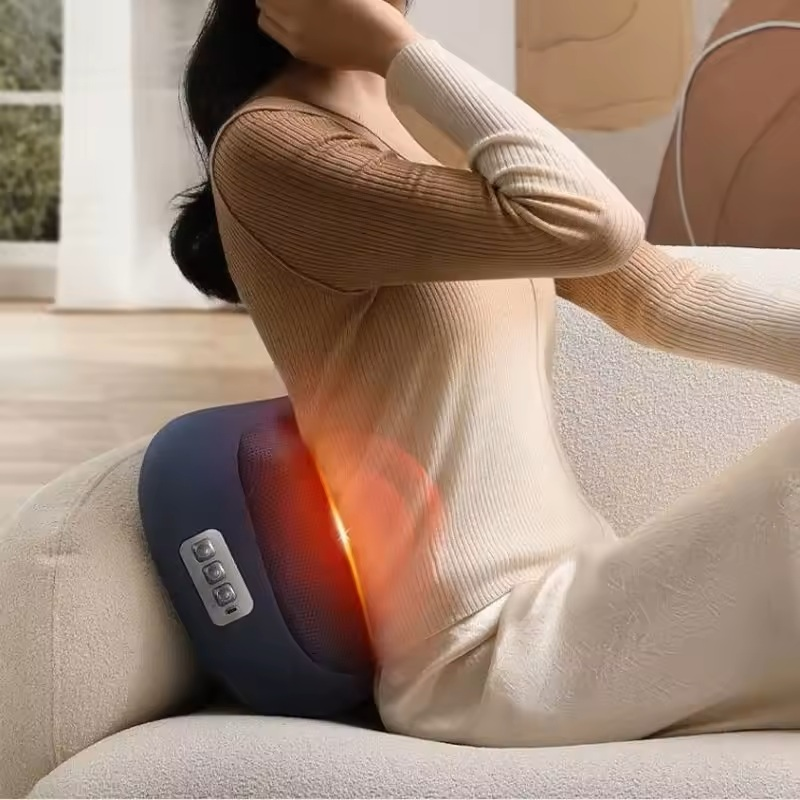
The Office Posture Crisis: Why Desk Workers Need a Relax Massager
Epidemiology of Desk-Based Musculoskeletal Strain: Neck, Shoulder, and Upper Back Tension
Millions of office workers spend 8 to 10 hours daily in front of screens—often hunched forward with shoulders rolled, head jutting ahead of the spine, and upper back rounded. This static posture places excessive mechanical strain on the neck, shoulders, and upper back. Over time, muscle fibers shorten and develop painful trigger points, leading to chronic tension and pain. Up to 60% of desk workers report neck or shoulder discomfort at least once a week, according to peer-reviewed occupational health studies. Poor ergonomics—such as monitors placed too low or chairs lacking lumbar support—exacerbate the issue. Without intervention, minor aches can progress into persistent musculoskeletal disorders. A relax massager helps break this cycle by directly targeting overworked muscles like the trapezius and levator scapulae, releasing built-up tightness before it becomes chronic.
How Static Sitting Impairs Circulation and Triggers Neuromuscular Fatigue
Prolonged stillness slows blood flow in the neck, shoulders, and upper back—reducing oxygen and nutrient delivery while allowing metabolic waste (e.g., lactic acid) to accumulate. This triggers neuromuscular fatigue, impairing the muscles’ ability to contract and relax efficiently. Stiff tissues further compress small blood vessels and cervical spinal discs, disrupting nerve signaling and contributing to tension headaches. Just 10 minutes of targeted massage can reverse this cascade: mechanical stimulation boosts circulation and activates the parasympathetic nervous system, helping muscles reset and recover without requiring time away from work.
How a Relax Massager Works: Science-Backed Relief for Office Workers
Myofascial Release and Parasympathetic Activation in Sedentary Contexts
Extended sitting stiffens the fascia—the connective tissue surrounding muscles—leading to adhesions that restrict movement and amplify tension. A relax massager applies sustained, localized pressure to release these restrictions through myofascial release. This mechanical input signals the autonomic nervous system to shift from sympathetic (fight-or-flight) dominance to parasympathetic (rest-and-digest) activation. Heart rate slows, cortisol declines, and muscle fibers begin to lengthen—restoring circulation and mobility. For desk workers, this means tangible relief from upper-back and neck stiffness within minutes, with benefits extending well beyond the session itself.
Clinical Evidence: 32% Reduction in Neck/Shoulder Tension with Daily 10‑Minute Use
A controlled clinical trial found that office workers who used a percussive relax massager for 10 minutes daily experienced a 32% reduction in self-reported neck and shoulder tension after two weeks. Participants also demonstrated improved cervical range of motion and fewer tension headaches. Consistency—not intensity—was the key factor: brief, daily use retrained neuromuscular patterns, reducing the cumulative stiffness that builds during sedentary work. This makes daily massage not just a comfort measure, but an evidence-based recovery habit that fits seamlessly into the workday.
Choosing the Right Relax Massager for Your Desk or Chair
Selecting the right relax massager for office use requires matching technology to your workspace, workflow, and physical needs—not just marketing claims. Each type delivers distinct physiological effects, but only some integrate smoothly into a professional environment.
Vibrational, Shiatsu, Percussive, and Air Compression: Pros and Limitations in Office Settings
| Massage Technology | Pros for Office Use | Limitations for Office Use |
|---|---|---|
| Vibrational | Quiet, compact, easily fits on a desk or seat cushion; effective for surface-level tension relief. | Limited depth of muscle relief; may not address deep knots. |
| Shiatsu (Rolling) | Mimics finger pressure to target knots in neck and upper back; can be adjusted to fit chair contours. | Requires a bulkier pad; rotating nodes can be noisy and may distract during calls. |
| Percussive | Delivers deep muscle relief for stubborn tension; short bursts are highly effective for resetting fatigued tissue. | Can be too intense for sensitive or frail necks; often requires holding the device, interrupting typing or screen focus. |
| Air Compression | Gentle, rhythmic squeezing improves circulation; very quiet and can be integrated into a supportive back pad. | Primarily targets the mid-to-lower back; less effective on tight neck or shoulder spots without supplemental design. |
For most office setups, vibrational or air compression models offer consistent, non-disruptive relief—ideal for use during focused work. If deeper release is needed, reserve a percussive model for scheduled breaks. Always prioritize noise level, size, and hands-free usability to ensure the device supports—not interrupts—your workflow.
Beyond Pain Relief: How a Relax Massager Boosts Focus, Energy, and Mental Resilience
A relax massager does more than ease sore muscles—it supports cognitive performance by modulating the nervous system. By activating the parasympathetic response, it lowers cortisol and elevates mood-supporting neurotransmitters like serotonin and dopamine. This shift reduces mental “noise” caused by physical discomfort and stress, freeing cognitive bandwidth for sustained attention and clear thinking.
Cognitive Benefits: 19% Improvement in Sustained Attention Among Remote and Hybrid Workers
Research shows that remote and hybrid workers using a relax massager for 10 minutes daily experienced a 19% improvement in sustained attention over four weeks. The effect stems from two synergistic mechanisms: first, reduced muscular discomfort eliminates a constant low-grade distraction; second, parasympathetic activation dampens stress hormones known to impair prefrontal cortex function. Over time, users report sharper decision-making, fewer mental lapses, and increased resilience during high-demand periods. For desk professionals, this positions the relax massager not as a luxury—but as a practical, physiology-informed tool for maintaining mental clarity and productivity throughout the day.
FAQ
Why do desk workers frequently experience neck and shoulder pain?
Desk workers often adopt poor posture, such as hunched shoulders and a forward head position, which strains muscles in the neck, shoulders, and upper back. Prolonged sitting and poor ergonomics exacerbate this problem.
How does a relax massager alleviate musculoskeletal tension?
A relax massager uses techniques like myofascial release and targeted pressure to relieve muscle tightness, enhance circulation, and reset neuromuscular patterns.
What types of relax massagers are suitable for office use?
Vibrational and air compression massagers are ideal for non-disruptive use during work hours. If deeper relief is required, percussive models can be used during breaks.
How long should I use a relax massager each day?
Clinical studies suggest that using a relax massager for 10 minutes daily can significantly reduce muscle tension and improve productivity.
Can a relax massager enhance cognitive performance?
Yes, by reducing muscular discomfort and activating parasympathetic functions, a relax massager helps lower stress and improves sustained attention and mental clarity.