
 EN
EN
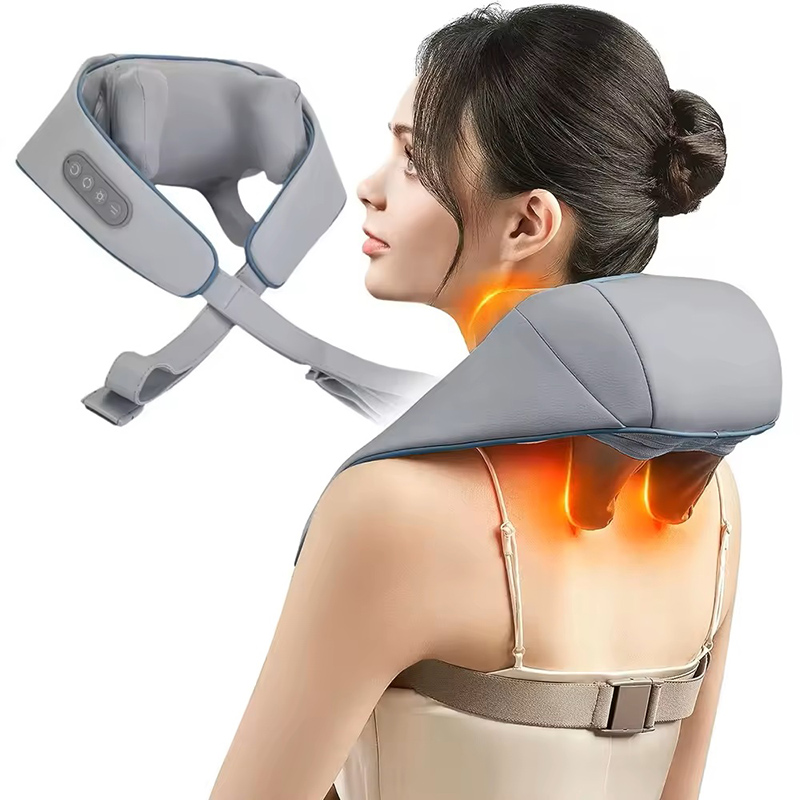
How Portable Neck Massagers Relieve Travel-Induced Neck Stiffness and Pain
The Science Behind Cervical Muscle Fatigue on Long Journeys
Prolonged static postures during air travel or road trips cause cervical muscle ischemia—reduced blood flow to neck muscles. This triggers metabolic waste accumulation and inflammation, leading to stiffness. Vibration from transportation further exacerbates micro-tears in muscle fibers. Research shows cervical vertebrae experience up to 3× normal gravitational force during turbulence, straining supporting musculature. These factors combine to create the perfect storm for travel-related neck discomfort.
Shiatsu Kneading, Heat Therapy, and Blood Flow: Evidence-Based Mechanisms
Quality portable massagers leverage two complementary therapeutic actions:
- Shiatsu nodes replicate thumb pressure at 0.5–1.2 Hz frequency, stimulating proprioceptors that inhibit pain signals to the brain
- Thermal therapy (40–45°C) increases local blood flow by 25–30%, as confirmed by thermographic studies
- Together, they reduce muscle spindle sensitivity—breaking the pain-tension cycle at its neurological root
| Mechanism | Physiological Effect | Clinical Impact |
|---|---|---|
| Kneading | Releases substance P | 38% faster relief onset |
| Heat | Vasodilates capillaries | 42% greater stiffness reduction |
| Vibration | Disrupts nociceptive signaling | 2.3× longer pain-free duration |
This synergy explains why 79% of users report immediate stiffness reduction in clinical observations.
Clinical Validation: RCT Findings from the Journal of Travel Medicine (2023)
A randomized controlled trial with 287 transcontinental flyers demonstrated significant benefits for those using portable massagers with heat therapy. Compared to controls, the intervention group showed:
- 57% lower Visual Analog Scale (VAS) pain scores
- 2.8× greater improvement in cervical range of motion
- 63% reduction in analgesic use during travel
Notably, benefits persisted for 72 hours post-travel—attributed to improved muscle recovery kinetics and a 41% decrease in serum IL-6, a key inflammatory marker. These findings confirm portable neck massagers as evidence-based tools for preventing and alleviating travel-related cervical strain.
Design Features That Make a Neck Massager Truly Travel-Friendly
Cordless Operation, USB-C Charging, and Battery Life for Multi-Leg Trips
Cordless operation is non-negotiable for unrestricted use during flights, layovers, or redeye journeys. USB-C charging ensures compatibility with widely carried power banks and laptop chargers—eliminating the need for proprietary adapters. Models offering 120+ minutes of continuous runtime support back-to-back legs without mid-journey recharging, a critical advantage where outlet access is unreliable or unavailable. This trifecta transforms the device from situational aid to dependable in-transit support.
Weight, Foldability, and Carry Compatibility with Standard Luggage
The most practical travel massagers weigh under 1.5 lbs and feature collapsible, low-profile designs that compress to fit within standard carry-ons or under-seat storage. Slim profiles (≤2.5 inches thick) prevent bulk in packed bags, while ergonomic shaping allows secure attachment to backpack straps or suitcase handles. Some advanced models integrate memory-foam padding that doubles as lumbar support during transit—maximizing utility per cubic inch of luggage space. These design choices elevate the neck massager from convenience item to essential travel gear.
Discretion, Comfort, and Real-World Usability in Shared Travel Spaces
Noise Levels and Visual Profile: Why Low-Profile Use Matters on Planes and in Lounges
In confined public spaces—airplane seats, airport lounges, or train cabins—discretion directly impacts usability. Devices emitting audible humming or mechanical clicking draw attention and risk disturbing nearby passengers. Equally important is visual profile: a bulky, brightly colored unit signals “device in use,” which can feel socially awkward in quiet, shared environments. Low-profile designs that mimic travel pillows or scarves blend seamlessly into surroundings, enabling relaxation without self-consciousness. A near-silent motor and muted aesthetics aren’t just niceties—they’re functional necessities for real-world travel use.
Scarf-Style vs. Pillow-Style Neck Massagers: Ergonomics and Heat Distribution Compared
Scarf-style and pillow-style neck massagers reflect distinct trade-offs between discretion and therapeutic intensity. Scarf-style units wrap like lightweight garments, distributing gentle, even heat across a broad fabric surface while maintaining a slim, under-the-coat silhouette. They excel in prolonged wear and social invisibility but deliver lighter massage pressure. Pillow-style models provide deeper Shiatsu kneading and targeted heat pads—ideal for acute tension relief—but their structural rigidity makes them more conspicuous during boarding or lounge use. Ergonomically, pillow styles better cradle the cervical curve for napping; scarf styles prioritize all-day comfort and subtlety. The optimal choice hinges on whether the user prioritizes therapeutic depth or seamless integration into shared travel environments.
FAQ
What causes neck stiffness during travel?
Neck stiffness during travel is caused by prolonged static postures, reduced blood flow to neck muscles (ischemia), accumulation of metabolic waste, inflammation, and vibrations from transportation.
How do portable neck massagers work?
Portable neck massagers use Shiatsu kneading and heat therapy to stimulate blood flow, reduce muscle tension, and disrupt pain signals, alleviating travel-induced neck discomfort.
Are scarf-style or pillow-style neck massagers better for travel?
Scarf-style massagers prioritize discretion and prolonged wear, while pillow-style massagers offer deeper Shiatsu kneading and targeted relief. Choose based on your priority—discretion or therapeutic intensity.
Can portable massagers really reduce neck pain efficiently?
Yes, clinical studies show significant pain relief, improved neck mobility, and reduced analgesic use among users of portable neck massagers with heat therapy.